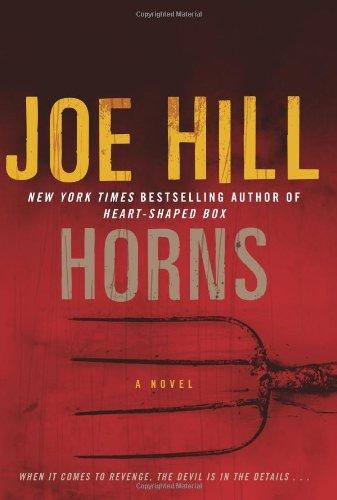
Horns
by Joe Hill • 2010 • 370 pages
Plot Summary
Ignatius 'Ig' Perrish, a social pariah and prime suspect in the murder of his girlfriend Marrin, undergoes a demonic transformation. After a night of desecrating Marrin's memorial, he grows horns that force people to reveal hidden truths. The novel uses a non-linear structure across five parts to explore Ig's past with his family, his friend Lee, and his relationship with Marrin. As Ig embraces his 'hellish gift,' the story shifts from a gritty mystery to gothic horror. Ig eventually identifies the true killer—a charismatic psychopath who hid a deep-seated resentment. The narrative culminates in a revenge-driven search for justice that questions the nature of God, evil, and redemption, punctuated by vivid acts of violence and psychological exposure.
Horns
Horns — Joe Hill (2010)
Some horror is about the monster at the door. Horns is about what's already sitting across from you at the table.
Joe Hill's 2010 novel follows Ignatius "Ig" Perrish, a young man whose girlfriend Merrin has been raped and murdered, and his entire town believes he did it. A year later, drunk and at his lowest, he wakes up with devil horns growing from his head. The horns come with a power: everyone who gets near Ig is compelled to confess exactly what they want, what they've done, what they're hiding. It's a terrible gift. But if you're trying to find a killer, it might be exactly what you need.
A Name I Already Trusted
I came to Horns having already read Heart-Shaped Box, so Joe Hill wasn't a stranger. His real name is Joseph King (Stephen King's son), but Hill has long since earned his own space in horror, and Heart-Shaped Box proved it. I picked this one up knowing the horror would come from the characters and what they do to each other, not from what jumps out at you.
The Shape of a Secret
Horns is divided into five named sections and doesn't move in a straight line. It cuts between Ig's present, horns growing and powers expanding, and the past: how he met Merrin, his family, his friendship with Lee. Non-linear timelines can be tricky, but the structure here earns itself. The mystery of who killed Merrin unspools gradually, the backstory adding emotional weight rather than disrupting momentum.
Hill's prose is accessible without being plain. It reads cleanly through most of the book, then starts to shift as Ig's transformation deepens, something more gothic and fairy-tale-adjacent creeping in at the edges. That shift is earned. There are hints of it early in the way Hill describes Ig and Merrin's relationship, so by the time the tone changes, it feels like where the story was always headed.
Everyone Wears a Face
The cast is one of Horns's real strengths. Ig, Merrin, his brother Terry, his best friend Lee: everyone has their own interior life. Nobody exists just to serve Ig's arc.
The character that stayed with me most isn't Ig, but rather the person ultimately revealed as responsible for what happened to Merrin. Hill writes this character as someone you could genuinely believe in: charismatic, likable, the kind of person you'd trust without hesitation. Underneath that, he excavates something monstrous. The deeper the book goes into this character's psychology, the more disturbing it gets, and that feeling doesn't leave you after finishing.
What Ig Hears
Horns is shelved as horror but it's also dark fantasy, crime fiction, and a grief story. Is it scary? Not in the way a haunted house story would be. The dread here is more specific: the confessions. When Ig's horns compel the people around him to voice their darkest impulses, the horror is that it sounds completely real. These aren't supernatural evils; they're just people, saying what they actually think and want.
The visceral moments are fewer, but they hit. There's a sequence where Hill takes you deep inside the head of one of this book's most psychologically disturbing characters: an injury, a hallucination, and a brutal act of violence against an animal. The imagery is specific and unflinching. It lodges. Hill has a gift for writing scenes that do exactly that, and this is one of the strongest examples.
A God That Didn't Answer
There's a theological argument running through Horns that could easily have felt heavy-handed. Ig is essentially becoming the devil, and much of his internal monologue wrestles with why a good God would let someone like Merrin die, and whether love justifies what he becomes. It doesn't turn into a lecture. Hill roots it all in character, and you understand Ig's justification because you understand Ig. You don't have to agree with him, but his logic tracks.
Fair warning: if blasphemy and anti-theistic themes genuinely bother you, this book won't be comfortable.
Give the Devil His Due
Horns is for readers comfortable with a book that doesn't stay in one lane: horror and mystery and dark fantasy and grief story, all at once. If you want something linear, or pure supernatural horror with no genre blending, this isn't it. If you've never read Joe Hill before, this is a strong place to start. His other novels tend to go darker, and Horns has enough structure and heart to pull you in without overwhelming you first.
I come back to this one regularly. Knowing how it ends changes how the earlier sections read; you catch things you missed, and some of them hit harder the second time.
At its core, this is a book about what grief looks like when it has nowhere left to go. It's exactly the kind of book Horror.Exchange is here for.
Character Voice Development
Everyone here has their own interior life, and the character ultimately revealed as responsible for what happened to Merrin is the one that stayed with me most—charismatic and likable on the surface, genuinely monstrous underneath.
Psychological Dread Fear
The dread here is specific: when Ig's horns compel people to confess what they actually want, the horror is that it sounds completely real—these aren't supernatural evils, just people.
Social Commentary Themes
The theological argument running through the book could easily have felt heavy-handed, but Hill roots it all in Ig's character, so you understand his logic even when you don't agree with it.
Storytelling
The non-linear structure could easily have been a gimmick, but it earns itself—the mystery of who killed Merrin unspools gradually while the backstory adds emotional weight instead of disrupting momentum.
Surprise Factor
The jumping timeline keeps the truth about Merrin's killer under wraps longer than I expected, without ever feeling like it's withholding information just to withhold it.
Villain Monster Quality
Hill writes this book's real antagonist as someone you'd trust without hesitation, then slowly excavates something monstrous underneath—that's what makes the character disturbing enough to stick with you after you finish.
Writing Style Readability
Hill's prose reads cleanly through most of the book, then shifts into something more gothic and fairy-tale-adjacent as Ig's transformation deepens—and that shift feels earned rather than sudden.
About the Reviewer

An avid reader who gravitates toward horror fiction that gets under your skin and stays there. Yvonne brings a reader's instinct for atmosphere, pacing, and character to every review, with a particular fondness for gothic horror, slow-building dread, and anything that makes it hard to sleep with the lights off.