
Little Nightmares
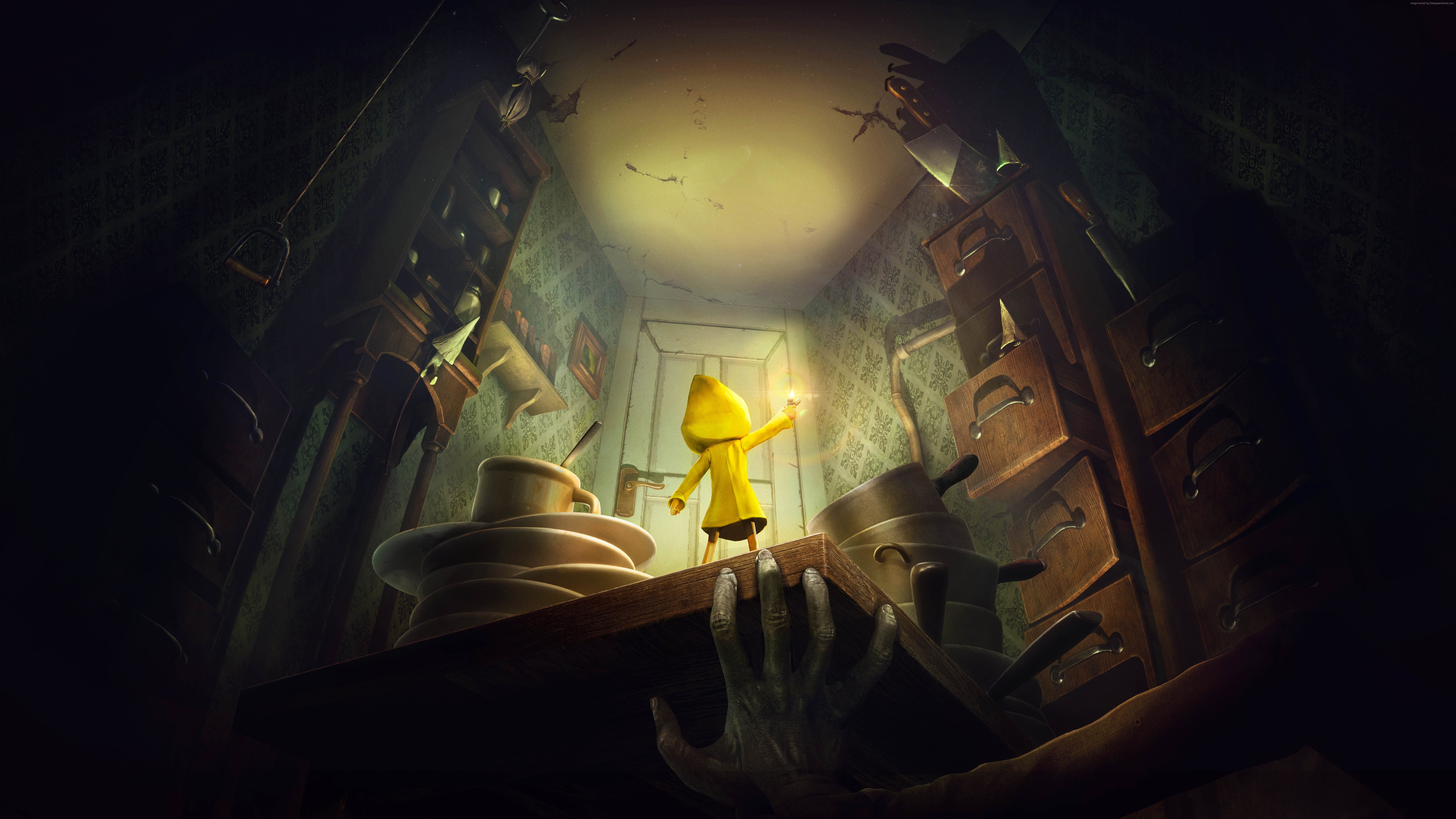
Little Nightmares is a 2.5D puzzle-platformer that follows a small girl named Six as she attempts to escape the Maw, a massive and grotesque vessel filled with distorted, oversized monsters designed to evoke childhood fears.
Horror Elements at a Glance
Full Review
Escaping the Maw
Little Nightmares is a dark puzzle-platformer from Tarsier Studios that puts you in the shoes of Six, a tiny girl in a bright yellow raincoat. You wake up inside a massive, terrifying underwater ship called the Maw. You don't have weapons, and nobody is there to help you.
There’s no dialogue and no explanation. Your only goal is to find a way out while avoiding the giant, twisted things that live there. It’s a short experience, taking about three to six hours, but it stays with you long after you put the controller down.
High Expectations and Darker Turns
I came into this after playing through Limbo and Inside, with the latter being one of my favorite games of all time. So I had a pretty good idea of what I was in for: a 2.5D world with room-to-room puzzles and a heavy, creepy atmosphere. I expected a similar vibe, and for the most part, that’s exactly what I got.
But Little Nightmares takes a much more grotesque turn than those other games. It leans hard into a scary, dark aesthetic that feels like a nightmare come to life, and as a horror fan, I really appreciated that they pushed the envelope with the imagery.
Staying Present in the Nightmare
The gameplay is very simple: you can run, jump, grab, crouch, and use a lighter. That’s it. There are no weapons, no upgrades, no HUD, and no menus pulling you out of the moment. The simplicity keeps you locked into the world. You’re not thinking about inventory or crafting or maps. The only thing you can focus on is what’s in the room and whether it can kill you.
It plays like a traditional platformer, but the 2.5D movement can be a double-edged sword. Sometimes the depth perception makes a jump or a ledge trickier than it needs to be, which can be annoying when you’re in the middle of a chase. There’s also not much hand-holding nor a persistent tutorial, but once you’re in the rhythm, it works well.
Even with those issues, the game stays accessible. Most puzzles are intuitive, and when you die, you usually know exactly what you did wrong. A few longer chase sequences push the checkpoint system to its limit, but they never cross into being unfair.
A World of Grotesque Detail
Visually, the game is incredible, with The Maw being a memorable horror setting that really sets the scene for a disturbing experience. Everything is scaled to make you feel tiny and powerless. The art direction has a stop-motion look to it that plays like a dark, sinister children’s book. It’s full of unsettling environmental details: caged children, piles of discarded shoes, and slabs of meat that you’re better off not identifying.
The sound design does a lot of the heavy lifting. There isn't much traditional music; instead, you get a lot of creaks, groans, and ambiance. I played with headphones, and I’d definitely recommend doing the same. Hearing the floorboards move or a sharp musical sting when an enemy spotted me made the whole thing much more immersive. The only thing I wanted was more subtle environmental sounds to fill the silence. A few distant footsteps or a muffled crash here and there would have pushed the tension even further.
Things That Go Bump in the Library
The enemies in this game are genuinely disturbing. The standout for me was the Janitor. He’s blind, but he has these impossibly long, distorted arms that reach out for you as you get near. There’s a scene in a library where you have to climb up and crawl across the upper levels while he’s pacing below. If you make any noise, he reaches up to grab you. It felt like a scene straight out of a horror movie and was one of my favorite moments from the game.
Later on, you deal with the Twin Chefs in the kitchen. This was probably the most challenging part for me, mostly because you have to time your runs perfectly to get past them through the expansive rooms. I loved the look of the kitchen, though I do wish they’d gone a little further with it, leaning more into a real slaughterhouse vibe.
Then there’s the Guest Area, which is just chaotic. Seeing dozens of bloated, ravenous people lurching toward you is a huge shift in energy from the stealthy parts of the game.
At the end, the final Lady’s Quarters pulls everything back into quiet dread for a satisfying gaming arc.
A Story Left to the Imagination
Little Nightmares doesn’t tell a traditional story. There’s no story arc, no character development, and no clear explanation for anything you see. Each chapter feels like its own separate nightmare. The only recurring thread is Six’s hunger, which becomes more disturbing as the game goes on.
The ending also doesn’t answer anything, leaving you with questions about what Six is becoming and what the Maw really is. The ambiguity certainly fits the game, but it also means players looking for a clear narrative won’t find one here.
Pacing and Pressure
The game is paced well, escalating from quiet, claustrophobic rooms to massive, frantic chases, and never overstays its welcome. The escalation from one chapter to the next gives the game a natural rhythm. However, it can be punishing. There are a few long chase sequences where a single mistake sends you back to the start of the room.
Most of the time the checkpoints are fair, but there were a few spots where I wished I could save mid-way through. For a super casual gamer like me, those spikes in difficulty can get a little frustrating, but they’re never so bad that you’ll want to quit.
Closing the Raincoat
Little Nightmares is a must-play if you like atmospheric horror and don't mind a story that doesn't give you all the answers. If you enjoyed games like Inside or Limbo, this is right up your alley, though it’s definitely the more grotesque selection of the bunch.
This probably isn't the game for you if you need a clear narrative or if you hate stealth-based gameplay where you can't fight back. There’s no combat here, just running and hiding.
It’s definitely worth a second playthrough, especially for completionists who want to find all the collectibles or try the no-death challenge. Knowing how it ends actually makes those early hunger moments feel even creepier. It’s a great one to pick up when you want to get lost in a nightmare for a few hours.
Little Nightmares is a compact, unsettling horror experience that knows exactly what it wants to be. It’s easy to pick up, hard to forget, and strong enough to revisit. For horror fans who want something they can finish in a single sitting without losing impact, the Maw is worth entering.
Atmosphere Sound Design
I played this with headphones, which I'd recommend to anyone—hearing the floorboards move or a sharp musical sting when an enemy spotted me made everything land harder. The only thing I wanted was a few more subtle environmental sounds to fill the silence.
Controls Accessibility
There's not much hand-holding or a persistent tutorial, which threw me a little at first, but once I found the rhythm it worked well.
Difficulty Challenge Design
Most of the checkpoints are fair, but a few long chase sequences push that system to its limit—as a pretty casual player, those spikes got frustrating at times, though never enough to make me want to quit.
Enemy Monster Design
The Janitor was the standout for me—blind, but with these impossibly long arms reaching for you if you make a sound while crawling past him in the library. It felt like a scene straight out of a horror movie.
Fear Factor Tension
Every room keeps you on edge because you're tiny and powerless with no way to fight back—the Guest Area especially, with dozens of bloated, ravenous people lurching toward you.
Game Pacing Length
The game escalates well from quiet, claustrophobic rooms to massive, frantic chases and never overstays its welcome across its three-to-six-hour runtime.
Gameplay Mechanics
The gameplay is dead simple—run, jump, grab, crouch, and use a lighter, that's it—and that simplicity is exactly what keeps you locked into the world instead of thinking about inventory or menus.
Replayability
It's worth a second playthrough for completionists chasing collectibles or the no-death challenge—knowing how it ends even makes those early hunger moments feel creepier.
Story Narrative
There's no traditional story here, no character development, no clear explanation for anything you see—just Six's hunger, growing more disturbing as it goes. The ambiguity fits, even if it means players wanting a clear narrative won't find one.
Visual Design Art Direction
The art direction has a stop-motion look that plays like a dark, sinister children's book, full of unsettling details like caged children and piles of discarded shoes.
Official Trailer
About the Reviewer

A lifelong horror fan with a particular obsession with supernatural horror and sci-fi. Josh approaches every review from the perspective of a genuine enthusiast, not a critic, instead asking the questions that actually matter: does it scare you, does it linger, and is it worth your time?