Little Nightmares II
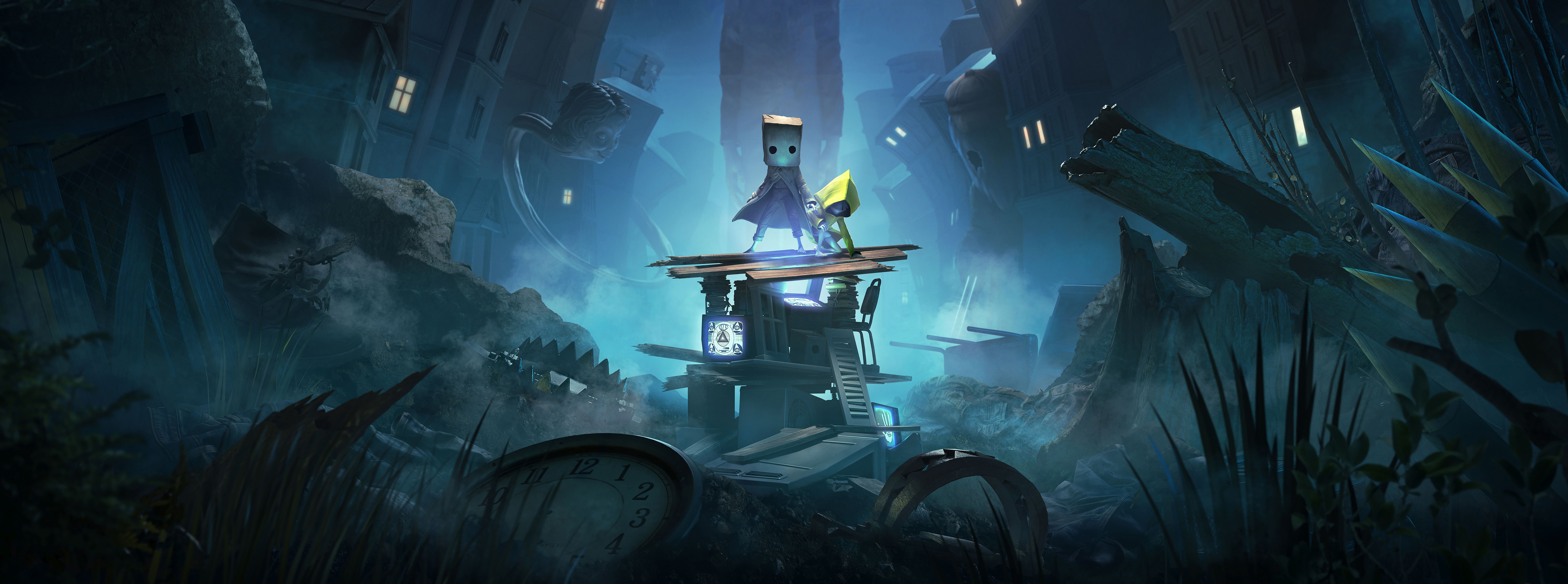
Little Nightmares II follows Mono, a boy with a paper bag over his head, as he teams up with Six to navigate the Pale City, a decaying world warped by the humming transmission of a distant signal tower.
Horror Elements at a Glance
Full Review
A Bigger, Bolder Nightmare
Here at Horror.Exchange, we know a good nightmare when we see one, and sometimes it’s not just about what chases you, but the world you’re running through. Little Nightmares II isn’t just a sequel; it’s a violent, visceral leveling up of that idea.
Released in 2021 by Tarsier Studios, the game follows Mono, a boy with a paper bag over his head, as he teams up with Six, the protagonist from the first game. Together, they have to navigate the Pale City, a decaying world warped by the humming transmission of a distant signal tower.
I came into this hoping for more of what the first game did well, but I also wanted it to push the boundaries. I wanted something scarier and more grotesque, and Little Nightmares II definitely delivered.
More Than Just Running and Hiding
The first game built its identity on helplessness. You couldn’t fight; you could only run and hide. This time, they introduced combat, and I think they did it really well. It’s used sparingly, so it never feels like an action game. You’ll pick up an axe or a pipe for a specific section, and it’s more of a timing puzzle than a brawl. You have to wait for the right moment to swing, and the enemies even hesitate to throw you off.
Every hit feels violent. Smashing the heads of the porcelain bully dolls is visceral, and it makes you feel more involved. You’re not just surviving anymore; you’re actively fighting to get through.
The flashlight is another great addition. In the first game, the lighter was just for seeing and felt like a missed opportunity. Here, the flashlight is a defense. It freezes certain enemies in their tracks, which is a clever mechanic that gives you a little more control without killing the tension.
A Beautifully Ugly World
The world in this sequel is bigger and more connected. You move from a dark forest to a twisted school, a horrifying hospital, and a city of distorted TV-watchers. Each area flows naturally into the next, and they all have their own unique sense of dread. The visuals are a clear improvement, with better rendering that makes the grotesque world feel beautifully realized.
The sound design is top-notch. From the start, the Hunter’s shotgun blasts are loud and explosive, destroying the cover you’re hiding behind. Later, the sound of the Teacher’s neck stretching as she hunts you is incredibly disturbing. The music is mostly minimal, but during big moments it swells up and makes the whole thing feel incredibly cinematic.
From Slasher to Silent Hill
The game is also much scarier than the first one. It starts with the Hunter, who gives off strong slasher vibes as he relentlessly pursues you. Then you get to the school, where the Teacher’s transformation is pure body horror. She’s already a tyrant, and when her neck starts stretching around corners to find you, it’s just grotesque.
The hospital was my favorite part. The mannequins that come to life in the dark gave me serious Silent Hill vibes. The way they only move when your flashlight is off is genuinely terrifying, especially when you have to navigate a room full of them in the final escape. The whole sequence is just an overwhelming sense of dread. It’s genuinely disturbing and one of the most effective horror sections in a game I’ve played in a while.
A Dream That Doesn't Owe You Answers
The story here is vague and dreamlike, which fits the series perfectly. Having Six as a companion is a great addition that changes the dynamic from the lonely journey of the first game. Her presence adds another layer of mystery to the world, and you’re left to interpret events and piece together the lore on your own. It works because the game never tries to be a straightforward story. It’s a nightmare, and nightmares don’t always make sense. They just flow from one unsettling event to the next.
The Chase at the End of Every Road
The game is about six hours long, and it feels like a complete story that doesn’t overstay its welcome. My main criticism is that the level structure gets a little repetitive. Almost every chapter ends with a big chase sequence. While the enemies and environments are different enough to keep it from getting truly boring, you can’t help but notice the pattern. But it’s a truly minor flaw in an otherwise great experience.
Final Recommendation
If you enjoyed the first game, you absolutely need to play the sequel. It takes everything that worked and makes it bigger, better, and bolder. It’s also a great fit for anyone who likes atmospheric puzzle games like Inside or Limbo. The controls are simple enough that even non-gamers can get a lot out of it. However, if you need a clear, traditional story or are a hardcore gamer looking for complex combat, this series might remain a little too simple for you.
For everyone else, Little Nightmares II is a fantastic, atmospheric horror game that improves on its predecessor in almost every way. It's a terrifying, beautiful, and unforgettable trip into the dark.
Atmosphere Sound Design
The sound design is top-notch—the Hunter's shotgun blasts are loud and explosive early on, and later the sound of the Teacher's neck stretching around corners is genuinely disturbing.
Controls Accessibility
The controls are simple enough that even non-gamers can get a lot out of this, which fits a series that's never wanted skill to be the barrier.
Difficulty Challenge Design
My main criticism is that the level structure gets a little repetitive—almost every chapter ends with a big chase sequence, and even with different enemies each time, you notice the pattern.
Enemy Monster Design
The mannequins in the hospital gave me serious Silent Hill vibes—the way they only move when your flashlight is off made navigating a room full of them in the final escape genuinely terrifying.
Fear Factor Tension
The hospital was my favorite part of the whole game and one of the most effective horror sections I've played in a while, thanks entirely to those mannequins.
Game Pacing Length
At around six hours, it feels like a complete story that doesn't overstay its welcome, even with that repeating chase-sequence structure.
Gameplay Mechanics
Combat is new this time, and it's used sparingly enough that it never turns into an action game—every hit feels violent and deliberate, more of a timing puzzle than a brawl.
Replayability
Six's presence and the cryptic lore give you a reason to piece things together on a second run, even if this is mostly a one-and-done narrative experience.
Story Narrative
The story stays vague and dreamlike, which fits the series perfectly—you're left to interpret events and piece the lore together yourself rather than getting it handed to you.
Visual Design Art Direction
The visuals are a clear step up from the first game, with better rendering that makes this grotesque world feel beautifully realized.
Official Trailer
About the Reviewer

A lifelong horror fan with a particular obsession with supernatural horror and sci-fi. Josh approaches every review from the perspective of a genuine enthusiast, not a critic, instead asking the questions that actually matter: does it scare you, does it linger, and is it worth your time?